Our industry may be very important to businesses as we communicate their message to the people they want to say it to and how. However, understanding the whole business and their objectives is vital in order to get our job right. This can be seen as the 'Iceberg Analogy', where you must know about the whole Iceberg even if we only work at the tip of it.
The bottom of the Iceberg is 'Business Objectives', where we understand how the business functions, what is important to them and what they want the business to achieve - this could be by way of profit, growth, ROI, shareholder value etc.
The middle of the Iceberg represents the marketing objectives - this can be to influence sales, market share, price, product and distribution. Understanding the marketing objectives will help you gear your campaign to obtain these goals whilst keeping campaigns in-line with the business objectives.
The tip of the Iceberg represents the communication objectives (this is where we come in), which will involve influencing people's feelings, attitudes, opinions and behaviours. This will communicate the messages that fundamentally derive from the business objectives and which were refined and contextualised within the marketing objectives.
All three sections of the iceberg need to flow harmoniously whereby each section is in line with the one before - more and more agencies are focusing too much on the tip of the Iceberg whereby they lose sight of the fact that the communications strategies are used to deliver the key objectives of the business as a whole. Immersing yourself in the whole business will allow agencies to understand what they are trying to achieve, and in turn will create a better campaign in order to meet their objectives and deliver a healthy ROI. Maintaining a close and well-managed relationship with the client and fully understanding their business is essential in order to create strong future campaigns.
Monday, 20 February 2012
Thursday, 16 February 2012
You choose first, then I will...
The whole concept of behavioural economics is the study of people and what makes them behave the way they do when it comes to their purchasing decisions. Marketing used to be governed by the classic economist view of 'people will try to get the most for the least effort', whereby people make rational decisions 100% of the time. It has come to light that this is not strictly true; people can make irrational decisions. Behavioural economics believes that decision-making is full of conscious and unconscious factors - which is why marketeers will look at many psychological ways to influence their audience to purchase their product. People are heavily influenced by what we think other people are doing (social norms) and how choices are presented to them (priming) - which is where the line between choice architecture and behavioural economics blurs. There are various ways of presenting choices to the consumer, which I will outline below;
Other scarcity tricks are things like 'closing down sales', 'private member club' etc, all tricks to get the consumer to place a higher value on the products - very prevalent within the luxury goods market.
Framing
This focuses on the belief that we make decisions on relative and not absolute information. I'll outline a basic example to prove this point based on a real American magazine;
If you go onto their site and see these options:
Online only - $59
Online and magazine - $125
People naturally go for the cheaper option as that is the most rational decision as you have nothing to base the value of the magazine on. In fact, 68% of people went for the subscription of 'Online only'. Now if we add another option into the mix:
Online only - $59
Magazine only - $125
Online and magazine - $125
The original options have not changed, but now the choice becomes more relative and people think that the third option is the better deal as it seems you get online for free. As soon as this other option was added, 16% of people went for online only and 84% went for the combined package.
Apple are also very good at this, no one realistically needs a storage device which will hold up to 140,000 songs of which you actively listen to, but as the choice is there, people will go for it.
![]() |
| Apple's iPod Touch data selection |
Additionally, in the restaurant world, owners will put a significantly expensive dish on the menu so that the comparison of the other dishes look cheaper and thus increasing average order value - a clever little trick to make you pay more.
Automatic to executive decisions
![]() |
| Fly on the Urinal concept |
People often repeat behaviours and some behaviours are done on auto-pilot. making people aware of their behaviours can help change the way you act. Which is why a lot of governmental campaigns will draw attention to your behaviour, so as by making you aware of it, you can change it. 'The fly in the urinal' concept has been proven to work - if you put a fly in the urinal, a man will look at it and suddenly be drawn to their behaviour, thus making them aim better and essentially not 'piss on the floor'. In the words of my manager ' it is why we see strategies which recognise our own habitual nature: in this instance trying to raise a decision to lock your care from the ‘automatic’ mind to the ‘executive’ mind, or unconscious decision making and conscious ones'.
Scarcity value
People place more value on things they believe are hard to come by or not a lot of. Diamonds are not allowed to come into the UK by the bucket load, there is a restriction in place on how many we can import - which is why people believe they are harder to come by and thus put this 'scarcity value' on the diamonds (this makes a lot of revenue within the jewellery business). Similarly, a Chanel nail varnish had a limited edition colour called 'Jade', as soon as they were hard to come by and celebrities were seen sporting the colour, the varnish were being sold on eBay for £85! Essentially, it is only a nail varnish where other brands offer very similar colours.
Other scarcity tricks are things like 'closing down sales', 'private member club' etc, all tricks to get the consumer to place a higher value on the products - very prevalent within the luxury goods market.
Social Herding
![]() |
| The Asch Test |
We all think we are individual, special and unique but unfortunately this is not true.... it is in our nature to conform to social norms and do what everybody else is doing. The 'Asch test' developed in the 1950s was designed to do this (see photo), people were invited into a meeting where they were shown this picture and were asked which line A,B or C was the same size as the line on the left? It is C, right? Well they were told that they could only choose between A & B, even though it is quiet clearly C. Everyone in the meeting followed everybody else and no one was brave enough to go with what they thought intuitively, rather what everybody else thought. This is still very true today, looking at the army, people are being groomed to harm people and inflict violence which goes against our instinct, but they feel as everyone else is doing it, they have to too.
Loss Aversion
People place higher value on things they already have than what they haven't got. Confused? It is the £100 lost vs £100 gained. People have emotional value on things they own, so people put extra effort in preventing from losing things. An experimental study was conducted where people were given mugs, they had 1 cup of tea from the mug before they were asked 'how much will you sell your mug for?', whilst other people who had not been given the mug were asked 'how much would you pay for the mug?'. The people who owned the mug, on average, said almost double the cost than those who did not have the mug - and they only had 1 cup of tea from it!
Loss aversion techniques include: money back guarantees and introductory free trials - as people already own it, they don't want to lose it.
Chunking
People are more likely to complete tasks which have been broken down or made easier. Banks are notorious for creating rigorous advertising campaigns about promoting the 'easyness' of switching bank accounts with them - they will do it all for you and you do not have to do anything. This attitude wins them over a lot of new business as it simplifies a complicated process. However, people have to want to change in the first place which is another massive hurdle banks have to jump over as many people will only switch banks 1-2 times in their life.
This is very basic overview of behavioural economics, but shows you how relevant it is in today's society. As consumers, we are constantly being analysed and studied as to our behaviour and what makes us buy certain products. There is so much information out there now, its scary! Soon hypnosis will be widely used and they can just hypnotise us to buying instead of relying on our own decision-making processes.
For further reading on this topic:
Behavioural Economics: Red hot or red herring - IPA Publications
Freakonomics - Steven D. Levit and Stephen J. Dubner (I personally think this is an excellent book)
Wednesday, 8 February 2012
Facebook-rexia
One of the many experiences at the agency is that we get to go to cool places like the Facebook offices in London. We got an opportunity to find out a bit more about the world of Facebook straight from their employees.
Firstly, lets recap some facts about Facebook;
845 million monthly active users at the end of December 2011.
Approximately 80% of monthly active users are outside the U.S. and Canada.
483 million daily active users on average in December 2011.
425 million monthly active users who used Facebook mobile products in December 2011.
Mark Zuckerburg's very first Facebook page contained very basic information, it was designed for 'elevator chat', information that you would usually share with people when you are just getting to know them; Name, where do you work, how old are you etc. Now, however, Facebook pages allow for a much deeper conversation where the it limitless to the information you can convey: what music you like, activities you have been doing recently, interactions with other friends, photos of what you have been doing etc. You can imagine that the demand for content is massive, therefore there are some very smart engineers, in America I presume, managing all this data.... a tricky job I would think....
The point of our visit was not only to be able to 'check-in' at Facebook, but we were also there to see how Facebook can be incorporated into our advertising campaigns and how it can help. Facebook is social by design - puting people at the beginning of the campaign process. A good example of this is the Photo ability that Facebook enabled on the site. At the time, Facebook was diversifying into a very cluttered market where companies like Flickr and Photobucket led the way. The photo tool was really bad, clunky and compressed the image so much that it was so small and very low res... and despite all this it was the top site for uploading photos as Facebook did something very different from their competitors - they allowed people to tag the people in their photos, which generated a method of sharing the photos easily.
Firstly, lets recap some facts about Facebook;
845 million monthly active users at the end of December 2011.
Approximately 80% of monthly active users are outside the U.S. and Canada.
483 million daily active users on average in December 2011.
425 million monthly active users who used Facebook mobile products in December 2011.
![]() |
| Mark Zuckerburg's First profile |
Now more than ever, people check Facebook almost as soon as they get up, average time is something ridiculous like 5 minutes. This Facebookrexia is very much a very wide spread condition - in fact, a Burgler got caught by police after he had left him self logged in after checked his Facebook account on the house computer - true story!
Facebook has also allowed for social and political movements around the world. The people of Colombia formed a march against the Colombian rebel group FARC, the Facebook group started in Colombia which then transpired around the world. The day of the march, hundreds of thousands of people marched in Colombia, whilst other marches took place around different cities around the globe; Canada, London etc. The response was unprecedented, all from just one Facebook page. This goes to show how successful the social network is at providing a global platform to express your anger and feelings.
The point of our visit was not only to be able to 'check-in' at Facebook, but we were also there to see how Facebook can be incorporated into our advertising campaigns and how it can help. Facebook is social by design - puting people at the beginning of the campaign process. A good example of this is the Photo ability that Facebook enabled on the site. At the time, Facebook was diversifying into a very cluttered market where companies like Flickr and Photobucket led the way. The photo tool was really bad, clunky and compressed the image so much that it was so small and very low res... and despite all this it was the top site for uploading photos as Facebook did something very different from their competitors - they allowed people to tag the people in their photos, which generated a method of sharing the photos easily.
Another advancement in this social process is the link-up of Ticketmaster and Facebook. In the U.S at the moment, Ticketmaster has teamed with Facebook so that when people are buying a ticket to an event they can see which friends are going and where they are sitting! Brilliant! We are tentative for it to be released over here... another addition to our social interactions!
With all this focus on social interaction and the fact that Facebook has an army of data available to them, they have a lot of well-targeted advertising propositions. Facebook in fact have their own targeting tool, whereby any member on the public can list to advertise on Facebook. The targeting is so specific that you as a user can enter in a demographic and Facebook will generate the number of people available in that demographic - the below picture shows that there are 9,697,280 men aged 25-44. This can be a perfect addition to any on-line advertising campaign whether it needs to be very specific or generic targeting.
The only difference with advertising with Facebook, is the creative has to be right. A Facebook profile is a very personal thing to many people, where loud adverts would not be welcomed. Instead, Mark Zuckerburg has made a point that advertisement on Facebook cannot be intrusive - the adverts have to blend into the profile and cannot be obvious - the picture to the left shows a good example from Ben and Jerry's. At the moment you have many adverts down the right hand side of the profiles which are by no means inconspicuous, but Facebook is starting to get clever with their advertising.... if a user becomes a fan of a page or expresses a 'like' for a certain product, that brand can create adverts that will appear in their news feed - equally they can do this even if they have not become a fan but likely to like the brand. In terms of the creative, content is everything! The most successful adverts on Facebook are usually video content or photos - this creates a better reaction from their audience and in turn has the opportunity for huge amounts of earned media.
| Ticketmaster with Facebook social plug-in |
![]() |
| Facebook Targeting Tool |
The only difference with advertising with Facebook, is the creative has to be right. A Facebook profile is a very personal thing to many people, where loud adverts would not be welcomed. Instead, Mark Zuckerburg has made a point that advertisement on Facebook cannot be intrusive - the adverts have to blend into the profile and cannot be obvious - the picture to the left shows a good example from Ben and Jerry's. At the moment you have many adverts down the right hand side of the profiles which are by no means inconspicuous, but Facebook is starting to get clever with their advertising.... if a user becomes a fan of a page or expresses a 'like' for a certain product, that brand can create adverts that will appear in their news feed - equally they can do this even if they have not become a fan but likely to like the brand. In terms of the creative, content is everything! The most successful adverts on Facebook are usually video content or photos - this creates a better reaction from their audience and in turn has the opportunity for huge amounts of earned media.
Brands can also create pages for their consumers to engage with, this is the only chance where brands can have a much deeper conversation with their customers. This is a brilliant opportunity to build brand relations and get people to 'fan' your brand. Obtaining 'fans' though, are not the be all and end all as some brands focus to heavily on getting fans - the focus should also be driving people to purchase your product and keep them returning.
Some successful pages are the Skittles Pages http://www.facebook.com/skittles?ref=ts and Kit-Kat Chunky http://www.facebook.com/kitkatuk.
It is fair to say a lot got learnt at our trip to Facebook and we wish them the very best of luck in this exciting time for them.
Lesson 12: The legend is true, Sean Parker (founder of Napster) removed the 'The' from the title 'The Facebook'.
| Fiona, me and Chiara at Facebook, London |
Friday, 27 January 2012
Don't forget about Regional!
| Hertfordshire's Local Paper |
Regional works across all mediums; TV, Radio, Outdoor, Press, Internet, Door Drops etc, but on a localised basis. In press alone they deal with over 1400 titles, compared to the 20 something titles in national press. They also deal with over hundreds of radio stations all over the UK, making them the most knowledgeable people in local UK advertising.
Taking retail brands as an example, local and regional advertising is essential to them when launching new stores. It's vital for stores to know their local area, who lives there? What are their habits? If for example, the area had a very low social grade and household income, higher-priced retailers would have to either adapt their pricing and advertising message or choose another site entirely in order to prevent failure.
In order to determine the local audience Regional use this very funky tool which creates a map of the local area you are wanting to know about where you can then put layers on such as schools, ethnicity, social grades etc - this provides a mind blowing map as it produces a visual of the audience the client is trying to look for. It has in some cases, provided 'Eureka' moments, as regional mapping can show trends in certain audiences which you might have not known about before. Knowing your local audience is vital because if you get them on board, then your job is already half done for you!
I have included an example of a regional map; this map alone shows us the area of Birmingham and the Penetration of the Asian community within the city. The coloured area represents the percentage of Asian penetration - the red areas show that the Asian penetration is 18 times more than the national average - this can give wonderful insight to companies wishing to target Asian communities. The turquoise squares show the primary and secondary schools within Birmingham, with the small blue spots showing where 6 sheets (outdoor media) are in relation to both the schools and Asian Communities.
There is no end to what the tool can do and can serve as a visual for audience segmentation and demographics.
![]() |
| City of Birmingham |
Also regional press has stigma to it that 'no-one reads it', but this is not true. I learnt whilst in the department that national press acts as a window- giving you a snapshot of the world, where as local papers act as a mirror whereby it reflects what is going on around you in your local community. In fact, 70.7% of all British adults, 32.9 million people, regularly read a regional newspaper compared with 56.8% who read a national newspaper, furthermore, 27% of people who read a regional newspaper do not read a national newspaper - after all you would be more interested about a murder that happens on your doorstop than you are a murder 100k away....
![]() |
| Walsall Advertiser distribution |
This map shows the distribution in purple stripes of the Walsall Advertiser - this information allows advertisers to determine who it reaches and where.
This needless to say takes a lot of time and work by the regional team. They have to think of a whole strategy within a localised area, which requires specialist knowledge of all local titles, radio stations,TV stations and outdoor panels etc, in order to target the audience they want. The regional team are fantastic and not only are they specialists across all local mediums, they are also the comms planners!
Trouble is, regional can get a bit forgotten about within massive national campaigns but what that they do is absolutely imperative and they do a bloody good job at it too!
Thursday, 19 January 2012
Brief thoughts on advertising regulations....
Advertising is obviously very powerful, where we subject consumers to a bombardment of information from a company or authority which subtly (or blatantly) tells them to do something. This can be a very sensitive area when deciding what message to tell them and how - which burns the question of who monitors and regulates our industry? I don't claim to speak from an expert opinion, so I can only go by what I have picked up along the way.
In terms of content, the ASA (Advertising Standards Authorities) manages what the creative agencies can do or say, which does not breach their code of policy. Interestingly, the ASA cannot enforce legislation, nor is it funded by the government - rather is it funded by a levy that is placed on the industry, making it a self-regulatory body. It's role is to investigate any complaints made by consumers and the like about the content of any advertisement - it's job is to ensure that all advertising complies with their code of policy whereby no advert is misleading, ambiguous, inaccurate or otherwise. Some cases which caused controversy was the Jan 2009 'Atheist bus campaign', whereby atheists were promoting their belief that there is 'no god' - this was communicated via posters slapped on the side of buses with the message: 'There probably is no God. So Stop Worrying and Enjoy your Life'. - this caused uproar by many Christian groups. The claim was investigated but was dismissed on the fact that the advert was an expression of the advertiser's opinion and that the claims in it were not capable of objective substantiation - in essence they were not derogatory to people with faith, just merely expressing their own.
Another governing body (of many) within the advertising and communications industry is Ofcom, probably the one that affects us (in this agency) the most. Ofcom is a government-approved regulatory authority for the telecommunications and broadcasting industries in the UK. Ofcom and the ASA compliment each other and ensures consistency in the advertising process. They essentially take the 'fun' out, as they prevent; cigarettes from being advertised, alcohol to be glamorised and perceived as 'you need to drink in order to have fun' and anything illegal such as drugs (obviously). This is all well and good, as they are trying to protect the innocent consumer - but as we enter a more celebrity crazed world, certain rules and regulations have relaxed which advertisers and communication agencies can exploit.
One of the most recent changes in the Ofcom regulations is the allowing of 'Product placement' on UK television. Product placement has always been allowed in the USA and any film coming from USA to our UK screens always blurred out any brands featured. However, the new regulations allows for advertisers to seek new streams of revenue from product placement within TV shows.
As outlined by the Guardian: 'Four categories of content – films (which in this case includes dramas and documentaries); TV series including soap operas; entertainment shows; and sports programmes – will be free to use product placement.
This has already been put into action with music videos having the celebrity sporting branded clothing and accessories, such like Pixie Lott seen to be sporting Lacoste shoes in her music video 'Gravity'.
| Atheist Bus Campaign- Jan 2009 |
| Viceroys cigarette advertisement |
One of the most recent changes in the Ofcom regulations is the allowing of 'Product placement' on UK television. Product placement has always been allowed in the USA and any film coming from USA to our UK screens always blurred out any brands featured. However, the new regulations allows for advertisers to seek new streams of revenue from product placement within TV shows.
As outlined by the Guardian: 'Four categories of content – films (which in this case includes dramas and documentaries); TV series including soap operas; entertainment shows; and sports programmes – will be free to use product placement.
Placement of alcohol and tobacco products is also barred and the same restrictions apply to gambling, medicines, baby milk and foods that are high in sugar or salt.
Other services that cannot be advertised on television, including escort agencies and weapons, have also been excluded from the new rules by Ofcom' http://www.guardian.co.uk/media/2010/dec/20/ofcom-product-placement-uk-tv
This has already been put into action with music videos having the celebrity sporting branded clothing and accessories, such like Pixie Lott seen to be sporting Lacoste shoes in her music video 'Gravity'.I don't know why this was never allowed before - quite rightly you cannot advertise in this way to children - however, why not to adults? Surely we are intelligent enough to spot celebrity endorsement, whereby we all don't run out and buy the products because it is seen as a recommendation? Ofcom has clearly seen the benefits which can come from product placement - especially in a time of retail struggle and celebrity craze.Ofcom estimate product placement to generate an annual value of £150m, and worth at least 5% of the total UK advertising market.
This has opened up a new and exciting way of advertising and communicating our message to our consumers through broadcasting, which is not just a static 30s advert. This lift also applies to radio, where DJ's and presenters can endorse products on air within radio shows - this has more risk of cluttering the airwaves and perceived as more 'annoying' to consumers as you are not relying on visuals and therefore not as subtle.
Are we edging to a country of blatant advertising? UK is known for its subtle and clever advertising, so lets hope we use product placement in the same way.
Thursday, 5 January 2012
Imagine a world without books.......
One of my thoughts were;
Imagine a world without books? This gives a sense of emptiness and an impression of a much less interesting place to live, with all our imaginations and thoughts tied up in our heads and not shared. However if I rephrase the question to; Imagine a world without physical books? Does this conjure up the same feelings? I mean, the books still exist but not in the traditional format that we are used to - instead we are going digital. This sparks the discussion of how important is the physical nature of the book and do we need it to enjoy the story?
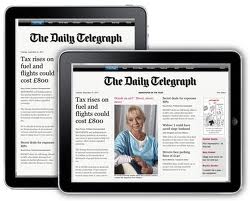
I watched an interesting documentary on BBC called 'Imagine', where the new realm of digitalisation is decreasing the number of physical books that we buy in shops. Instead it is the era of Kindles, iPads and e-books, where you can download thousands of books onto one device without the need of lugging big bulky books around with you. Some people think this kills the romanticism of reading books and takes away from the whole experience, other people think that the book is just a method of transmitting ideas - therefore it does not matter how these are communicated. It is interesting to think that people believe that the actual holding of the book and the smell of the book adds to the experience - surely we are just reading it for the escapism? However, as it may seem that we are running into this era where everyone owns an iPad (which it may seem like that to a Londoner) but the reality is that only 13% in the UK actually own an e-book reader, which tells me we are quite far off a world of no books!Translating this digital ethos to the press world, news and newspapers can be downloaded easily by way of 'apps', but are they a threat? My uncle is a perfect example of this, a man who just turned 60 was quite happy to chuck away the use of the newspaper and read the news on his new iPad. This has sparked certain theories within the industry that 'press' is a dying medium and that there are no future for the press traders - its all going digital! I wonder though, how much of this is true? Sure, the press team are getting trained in digital aspects, but I think that is more for purposes of harmonisation in the industry to encourage working together.
Press has been on the decline, but looking at recent statistics; 10+ million newspapers are still bought everyday in the UK with 75,763,015 sold every week! Speaking in terms of advertising, 1 insertion reaches about 57% of all adults. If you were to read just those statistics alone, you would not think press is on the decline - it is still prevalent within our society and I don't see it going anywhere soon. If you want to reach adults on a mass scale, then press is definitely a strong contender in the channel mix.
The digitalisation is certainly a lot faster in London than anywhere else in the UK, in fact, London is a little world of its own where people forget that the rest of the UK exists (London accounts for 12% of the entire UK population). Life is a lot slower in many parts of the UK, where the carrying of books is not an issue and they have time to go pick up the daily newspaper - however, when London sneezes, the rest of the UK catches a cold..... therefore London maybe a good futuristic illustration of the world to come, where everybody throws away traditional methods of reading and embraces the digital world of e-books.
It begs the question, what could ever be next?
Thursday, 1 December 2011
Forgotten your wallet? I have an app for that....
The era is nearly upon us where here in the UK, we will be able to pay for goods using our mobile phone! The technology has already hit america and is proving to be a success - the technology used is the same as the Barclay's pass card, where you can pay just by swiping your card.
The proposal is that the your mobile phone will have the details of your bank card(s), which to access you need to type in your pin code, then you swipe your mobile across a machine (similar to that of an oyster), which then deducts money from your account... crazy eh?
At first this screams SECURITY ISSUES! and WHAT IF I LOSE MY PHONE? - all very good questions. The security however, will not be any different from internet banking/shopping as you still need to enter your pin code to access it. However, if you lose your phone, well you better hope you have your bank card on you (thus slightly defeating the point of it in the first place). however, people are convinced this will revolutionise how we use our phones and access our money - digitalisation as we know it - no need for individual tangible items, you can have it all on your one phone!
It will be interesting to see how this takes off in the UK as English culture is quite different to that of the US and not as open to everything (especially outside of London). It has sparked questions in my mind, would I use it? - Probably, if everyone else used it and it seemed to enhance my lifestyle. Surely, though, this is for people trying to shave milliseconds in every action they do in order to save time within their horrendously busy lifestyle - is anyone really that busy?
Anyway, thought I would forewarn you of the future if you did not already know....
Subscribe to:
Posts (Atom)